
We all have moments when we need peace and quiet. Maybe you’re working on an important project, studying for an exam, relaxing after a long day, or simply need some personal space. While saying “Do not disturb” gets the message across, it can sometimes sound too formal, cold, or even a little rude depending on the situation.
That’s why many people search for other words for do not disturb. A softer, friendlier, or even funnier alternative can help you set boundaries without hurting someone’s feelings. Whether you’re texting a friend, updating your phone status, hanging a sign on your office door, or asking for uninterrupted time at home, choosing the right words makes a big difference.
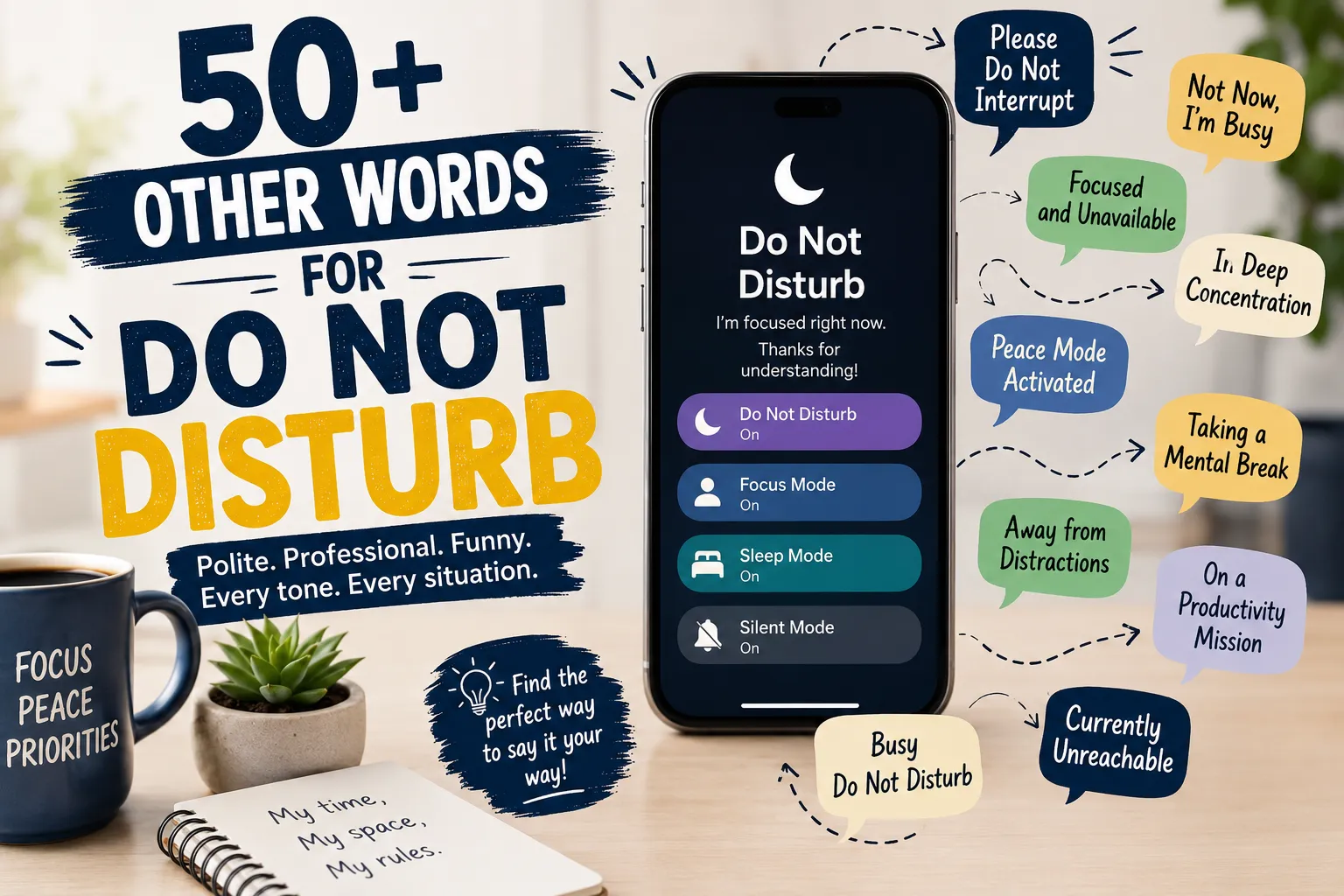
In this guide, you’ll discover over 50 natural alternatives, real life examples, practical tips, and situations where each phrase works best.
What Does “Other Words for Do Not Disturb” Mean?
“Do not disturb” simply means that you don’t want interruptions for a certain period of time. It politely asks others to respect your time, privacy, or focus.
People use this phrase in many everyday situations. You might put it on your hotel room door, activate it on your phone, or tell coworkers you’re busy during a meeting.
However, depending on who you’re speaking to, you may want something that sounds more polite, casual, professional, humorous, or thoughtful. That’s where alternative phrases become useful. They help you communicate the same message while matching the tone of the conversation.
50+ Other Words for Do Not Disturb
Polite and Appreciative Alternatives
Reply: “Please give me a little quiet time.”
Example:
You’re finishing an important report and tell your family, “Please give me a little quiet time. I’ll join you once I’m done.”
Reply: “I’ll get back to you as soon as I can.”
Example:
A friend sends several texts while you’re in class. You reply, “I’ll get back to you as soon as I can.”
Reply: “I’d appreciate some uninterrupted time.”
Example:
Your coworker stops by your desk. You smile and say, “I’d appreciate some uninterrupted time until I finish this.”
Reply: “Can we talk a bit later?”
Example:
Your sibling wants to chat while you’re studying. You answer, “Can we talk a bit later?”
Reply: “I’m focusing on something important right now.”
Example:
Someone calls during your online meeting. You text, “I’m focusing on something important right now.”
Reply: “I’ll reach out when I’m available.”
Example:
Your friend keeps checking in. You respond, “I’ll reach out when I’m available.”
Reply: “Thanks for understanding.”
Example:
Before ending the conversation, you say, “Thanks for understanding. I just need some quiet time.”
Reply: “Could we continue this later?”
Example:
Your colleague starts a discussion before your presentation. You politely ask, “Could we continue this later?”
Reply: “I’m taking some personal time.”
Example:
You let your friends know, “I’m taking some personal time this evening.”
Reply: “Please excuse me for a while.”
Example:
At a family gathering, you quietly say, “Please excuse me for a while.”
Flirty and Playful Alternatives
Reply: “You’re distracting me in the best way.”
Example:
Your crush keeps sending cute messages. You reply, “You’re distracting me in the best way.”
Reply: “Save that smile for later.”
Example:
They keep making you laugh during work. You say, “Save that smile for later.”
Reply: “Let me miss you for a little while.”
Example:
Your partner keeps texting throughout the day. You answer, “Let me miss you for a little while.”
Reply: “Pause the charm for a moment.”
Example:
Someone keeps flirting while you’re busy. You laugh and say, “Pause the charm for a moment.”
Reply: “You’ll have my full attention later.”
Example:
Your date wants to keep chatting. You text, “You’ll have my full attention later.”
Reply: “I’m busy now, but you’re worth the wait.”
Example:
You send this before an important meeting.
Reply: “Don’t disappear. Just give me a minute.”
Example:
Someone worries you’re ignoring them. You reassure them with this reply.
Reply: “Hold that thought until I’m free.”
Example:
Your crush starts telling an exciting story. You answer, “Hold that thought until I’m free.”
Reply: “I’ll make it up to you later.”
Example:
You’re working late and promise to spend time together afterward.
Reply: “You’re making it hard to concentrate.”
Example:
Someone keeps sending funny selfies while you’re trying to study.
Confident and Self Respect Alternatives
Reply: “I’m protecting my focus.”
Example:
You decline unnecessary interruptions during work.
Reply: “Right now, my priority is this task.”
Example:
Your friend asks to hang out immediately. You explain your priority.
Reply: “I need uninterrupted time.”
Example:
You tell your family before beginning an online exam.
Reply: “I’ll respond when it works for me.”
Example:
You set healthy communication boundaries.
Reply: “I’m unavailable at the moment.”
Example:
A coworker messages during your break.
Reply: “I’m choosing quiet right now.”
Example:
You decide to enjoy a peaceful evening without distractions.
Reply: “I’ll reconnect later.”
Example:
You end a conversation politely before returning to work.
Reply: “I’m taking a break from notifications.”
Example:
You post this as your status while relaxing.
Reply: “My attention is fully occupied.”
Example:
Someone calls while you’re handling an important deadline.
Reply: “Let’s continue when I have more time.”
Example:
You avoid rushing an important conversation.
Funny and Savage Alternatives
Reply: “My patience is currently offline.”
Example:
Your friend keeps interrupting your gaming session.
Reply: “Disturb at your own risk.”
Example:
You place this on your office door for laughs.
Reply: “Brain under construction.”
Example:
You say this while trying to solve a difficult problem.
Reply: “Silence is my favorite playlist.”
Example:
Your roommate keeps talking while you’re reading.
Reply: “Error. Human needs quiet mode.”
Example:
You jokingly text this during a stressful day.
Reply: “Come back with snacks.”
Example:
A sibling wants your attention. You tease them with this reply.
Reply: “Currently unavailable to the world.”
Example:
You update your messaging status before a nap.
Reply: “Interruptions require an appointment.”
Example:
Your coworkers laugh after reading your desk sign.
Reply: “Thinking. Please don’t reboot me.”
Example:
You joke while brainstorming ideas.
Reply: “Today’s conversation quota is full.”
Example:
You use this after a long day of meetings.
Curious Thoughtful and Mature Alternatives
Reply: “Can we revisit this later?”
Example:
An emotional discussion begins while you’re exhausted.
Reply: “I want to give this my full attention.”
Example:
You delay the conversation because it deserves focus.
Reply: “I need a little space to think.”
Example:
You say this before making a big decision.
Reply: “Let’s talk when we’re both relaxed.”
Example:
A disagreement starts getting heated.
Reply: “I’d rather continue when I can focus.”
Example:
You postpone a serious conversation after work.
Reply: “I’m recharging for a bit.”
Example:
You spend the evening away from your phone.
Reply: “I need some uninterrupted reflection.”
Example:
You take time before responding to important news.
Reply: “Let’s continue after I’ve finished this.”
Example:
You pause a conversation to complete an urgent task.
Reply: “I’m giving myself a quiet moment.”
Example:
You practice mindfulness after a busy day.
Reply: “I don’t want to rush this conversation.”
Example:
You choose quality communication over quick replies.
Real Life Situations
When Your Crush Keeps Texting
Best Reply:
“I’m busy now, but you’ll have my full attention later.”
This keeps the conversation warm without sounding uninterested.
When a Friend Won’t Stop Calling
Best Reply:
“I’ll get back to you as soon as I can.”
It sounds polite while setting a clear boundary.
When Someone Interrupts You at Work
Best Reply:
“I’m focusing on something important right now.”
Professional, respectful, and direct.
When You’re Not Interested in Talking
Best Reply:
“I’m taking some personal time.”
It avoids conflict while respecting your own needs.
When You’re Studying
Best Reply:
“Please give me a little quiet time.”
Simple, kind, and easy for everyone to understand.
What to Avoid
Avoid sounding rude when a polite response will do.
Don’t ignore people without explaining if the conversation matters.
Avoid using sarcastic replies in professional settings.
Don’t over explain why you need quiet.
Avoid sending mixed signals by saying you’re busy while staying active online.
Don’t use the same response in every situation. Match your tone to the person.
Pro Tips
Choose your words based on who you’re talking to. Friends, coworkers, and family all respond differently.
Keep your message short. Long explanations often invite more questions.
Stay confident when setting boundaries. Respecting your own time encourages others to do the same.
Bonus Quick One Liners
Busy at the moment.
Quiet time, please.
Talk soon.
I’ll reply later.
Need some focus.
Back in a while.
Currently unavailable.
Let me finish this first.
See you later.
Saving my energy.
One conversation at a time.
I’ll check in soon.
Conclusion
Finding other words for do not disturb helps you communicate your need for space without sounding cold or unfriendly. Whether you want to sound polite, playful, professional, or confident, the right phrase makes every conversation smoother. Setting healthy boundaries isn’t rude. It’s a sign that you value your time and respect both yourself and others. Choose the response that fits the moment, speak with confidence, and let your words create understanding instead of distance.
Discover more
best places for someone to study