
We’ve all heard someone say, “Don’t work too hard,” as we leave for the office, finish a meeting, or start a busy day. It is a kind phrase that shows someone cares about your well being and hopes you don’t overwork yourself. While it’s thoughtful, hearing or saying the same words repeatedly can feel a little predictable.
That is why many people search for other ways to say “don’t work too hard.” Whether you’re writing an email, sending a text, encouraging a coworker, or chatting with a friend, using a fresh expression can make your message sound more natural and personal. Some alternatives are professional, while others are funny, warm, or even a little flirty. In this guide, you’ll find over 50 creative alternatives, complete with real life examples, practical tips, and suggestions for choosing the right phrase for every situation.
What Does “Other Ways to Say Don’t Work Too Hard” Mean?
“Don’t work too hard” is a friendly way of telling someone to take care of themselves while working. It encourages them to avoid stress, take breaks, and maintain a healthy balance between work and rest.
People commonly say it to coworkers, friends, family members, or partners before they begin a busy shift or long day.
For example:
“Have a great day. Don’t work too hard.”
You could also say:
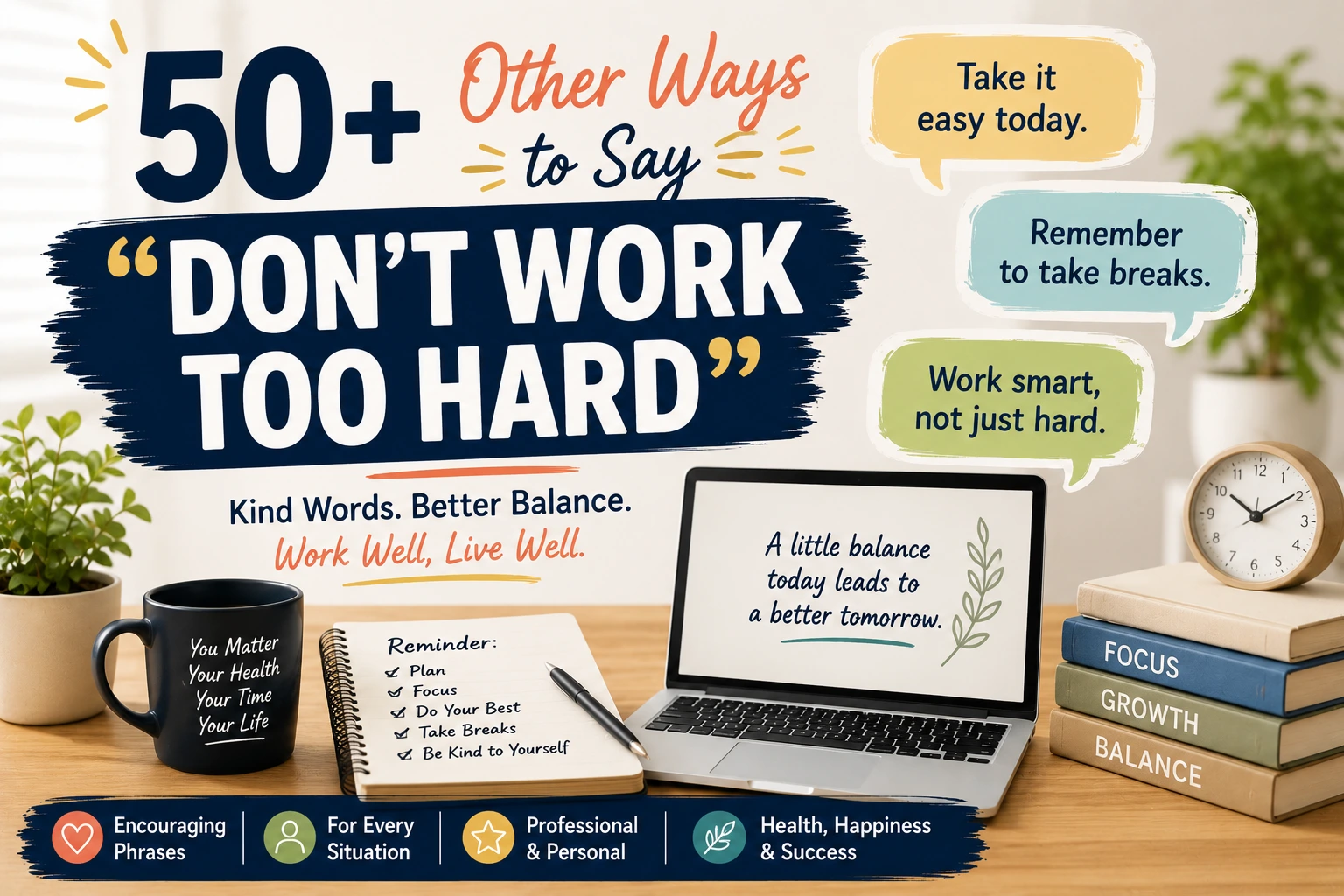
“Take it easy today.”
“Remember to take breaks.”
“Save some energy for yourself.”
Each version shares the same caring message while fitting different relationships and situations.
Polite Appreciative Alternatives
Reply: “Take it easy today.”
Example:
You send this to a coworker before a busy morning meeting.
Reply: “Remember to take breaks.”
Example:
Your friend has a long shift ahead.
Reply: “Take good care of yourself.”
Example:
You text your sibling before work.
Reply: “Have a productive day.”
Example:
A professional message to a colleague.
Reply: “Don’t forget to rest.”
Example:
Someone has been working overtime all week.
Reply: “Take things one step at a time.”
Example:
You encourage a stressed classmate.
Reply: “Be kind to yourself today.”
Example:
A thoughtful message before exams or work.
Reply: “Hope your day goes smoothly.”
Example:
You wish your teammate a good day.
Reply: “Do your best, but don’t overdo it.”
Example:
A caring reminder before a busy project.
Reply: “Wishing you a balanced day.”
Example:
Perfect for a professional email.
Flirty Playful Alternatives
Reply: “Save some energy for me.”
Example:
You text your partner before they head to work.
Reply: “Don’t let work steal all your attention.”
Example:
Your crush has a packed schedule.
Reply: “I’ll expect the same smile after work.”
Example:
A playful text before they leave.
Reply: “Don’t make work your favorite person.”
Example:
You tease someone you’re dating.
Reply: “Remember, someone is waiting to hear from you later.”
Example:
A sweet message to keep the conversation going.
Reply: “Work hard enough to impress, then come back.”
Example:
A fun message before their meeting.
Reply: “Leave a little energy for our plans.”
Example:
You already have dinner planned together.
Reply: “Your job gets enough of your time.”
Example:
A lighthearted reminder to prioritize yourself.
Reply: “Don’t let your inbox win.”
Example:
A funny text before a busy workday.
Reply: “I want the happy version of you later.”
Example:
A caring but playful message to your partner.
Confident Self Respect Alternatives
Reply: “Work smart, not just hard.”
Example:
You encourage your teammate before a deadline.
Reply: “Pace yourself.”
Example:
A friend has several meetings lined up.
Reply: “Quality beats exhaustion.”
Example:
You remind someone that overworking isn’t always productive.
Reply: “Know when to call it a day.”
Example:
A healthy reminder after a long week.
Reply: “Success starts with balance.”
Example:
A motivational message for a coworker.
Reply: “Protect your peace.”
Example:
You encourage someone to avoid burnout.
Reply: “Take care of yourself first.”
Example:
A thoughtful message to a hardworking friend.
Reply: “You don’t have to do everything today.”
Example:
Someone is overwhelmed with tasks.
Reply: “Steady progress is enough.”
Example:
A reassuring message during a busy project.
Reply: “Your health matters too.”
Example:
A reminder that well being comes before work.
Funny Savage Alternatives
Reply: “Try not to become Employee of the Century.”
Example:
Your best friend laughs before heading to work.
Reply: “Don’t let your laptop adopt you.”
Example:
Someone works from home every day.
Reply: “Remember, coffee isn’t a personality.”
Example:
A funny text to your coworker.
Reply: “The emails will survive without you.”
Example:
You remind your friend to take a lunch break.
Reply: “Don’t break the office from working too hard.”
Example:
A playful message before a busy shift.
Reply: “Pretend you’re busy sometimes.”
Example:
A joke between close coworkers.
Reply: “Leave some work for tomorrow.”
Example:
You tease someone who always stays late.
Reply: “Your keyboard deserves a break too.”
Example:
A funny message after seeing someone work nonstop.
Reply: “Productivity can wait five minutes.”
Example:
You remind your friend to stretch.
Reply: “Don’t let spreadsheets win.”
Example:
A humorous text before work begins.
Curious Thoughtful or Mature Alternatives
Reply: “Take care of your energy.”
Example:
You know someone has a demanding schedule.
Reply: “Remember that rest is productive too.”
Example:
A thoughtful reminder for a hardworking friend.
Reply: “Work at a healthy pace.”
Example:
A supportive message before a deadline.
Reply: “Listen to what your body needs.”
Example:
Someone has been feeling exhausted lately.
Reply: “Balance is part of success.”
Example:
You encourage healthy work habits.
Reply: “Take a moment to breathe today.”
Example:
A calming message before work.
Reply: “Don’t forget to enjoy your day.”
Example:
Work shouldn’t be the only thing that matters.
Reply: “Protect your time and your health.”
Example:
A mature reminder to avoid burnout.
Reply: “Small breaks make a big difference.”
Example:
Perfect for someone working long hours.
Reply: “Your well being is important.”
Example:
A sincere message that shows genuine care.
Bonus Quick One Liners
Take it easy.
Work smart.
Don’t overdo it.
Take care.
Stay balanced.
Go easy on yourself.
Remember to rest.
Pace yourself.
Enjoy your day.
Save some energy.
Real Life Situations
When Your Crush Is Heading to Work
Best phrase:
“Save some energy for me.”
It feels playful and keeps the conversation warm.
When a Coworker Has a Busy Day
Best phrase:
“Work smart, not just hard.”
It sounds supportive and professional.
When Your Friend Is Feeling Burned Out
Best phrase:
“Remember that rest is productive too.”
It encourages them without sounding judgmental.
When Sending a Professional Email
Best phrase:
“Hope your day goes smoothly.”
It is polite, positive, and appropriate for the workplace.
When Your Partner Is Working Late
Best phrase:
“I want the happy version of you later.”
It shows care while adding a lighthearted touch.
What to Avoid
Avoid sounding sarcastic if someone is genuinely stressed.
Do not encourage unhealthy work habits by praising nonstop work.
Avoid making jokes if the person is dealing with serious pressure.
Keep your message appropriate for your relationship.
Do not assume everyone enjoys playful comments at work.
Choose words that sound sincere rather than forced.
Pro Tips
Think about the person’s personality before choosing your words. Some people appreciate humor, while others prefer simple encouragement.
A short message often feels more genuine than a long speech. Sometimes a simple “Take care of yourself today” says everything.
If you’re sending the message to a coworker or client, keep it warm but professional. Save the playful alternatives for friends or people you’re close to.
Conclusion
“Don’t work too hard” is a thoughtful phrase, but using different expressions can make your messages feel more personal, memorable, and meaningful. Whether you’re encouraging a friend, wishing a coworker well, or sending a sweet text to someone special, choosing the right words shows that you genuinely care. A little kindness can make even the busiest day feel lighter, so never underestimate the power of a thoughtful message.
Discover more