

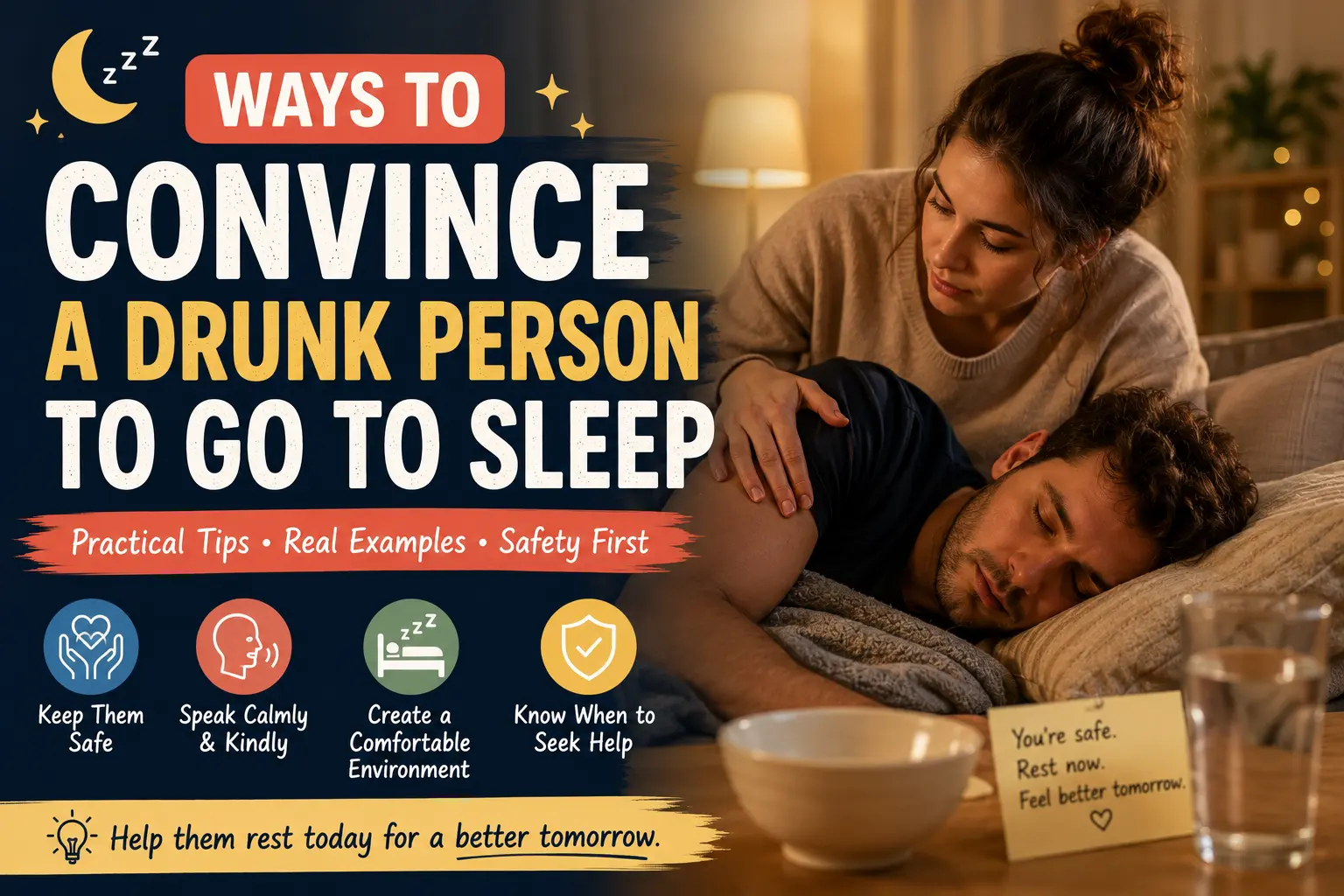
If you’ve ever been around someone who’s had too much to drink, you know how unpredictable the situation can be. Some people become loud and energetic, while others insist they aren’t tired even though they’re clearly exhausted. Trying to convince a drunk person to go to sleep can feel frustrating, especially when you’re simply trying to make sure they’re safe and comfortable.
Many people search for ways to convince a drunk person to go to sleep because they want to help a friend, family member, partner, or roommate without causing an argument. The goal isn’t to force someone into bed. Instead, it’s to encourage them to rest in a calm, respectful way while keeping their safety as the top priority.
This guide shares practical, realistic, and compassionate ways to help a drunk person settle down, along with important safety tips and situations where medical attention may be necessary.
What Does “Ways to Convince a Drunk Person to Go to Sleep” Mean?
This phrase refers to safe and gentle methods for encouraging someone who has been drinking alcohol to stop partying, calm down, and rest for the night.
A drunk person may refuse to sleep because they feel energetic, emotional, overly confident, or simply don’t realize how intoxicated they are. In many cases, they aren’t thinking clearly, which makes it harder to have a logical conversation.
Helping them go to sleep doesn’t mean forcing them or dragging them into bed. Instead, it means creating a calm environment, speaking kindly, reducing distractions, and making sure they’re in a safe place.
It’s also important to remember that someone who is heavily intoxicated may need medical attention instead of sleep. If they’re difficult to wake, vomiting repeatedly, having trouble breathing, or losing consciousness, call emergency medical services immediately rather than assuming they just need rest.
Calm and Supportive Approaches
Tell them the party can continue tomorrow.
Sometimes people don’t want the fun to end. Reminding them that tomorrow is another day can make bedtime feel less like they’re missing out.
Example:
Your friend wants to keep playing music at 2 a.m.
You smile and say, “Let’s call it a night. We can hang out again tomorrow.”
Speak in a calm and gentle voice.
Drunk people often respond better to a relaxed tone than loud commands.
Example:
Instead of shouting across the room, you quietly say, “Come on, let’s get you comfortable.”
Keep your instructions simple.
Long explanations can be confusing for someone who’s intoxicated.
Example:
Rather than giving several directions, simply say, “Let’s head to your room.”
Offer to walk with them.
People are more willing to cooperate when they don’t feel alone.
Example:
You say, “I’ll walk with you.”
They nod and slowly head toward the bedroom.
Remind them they’ll feel better after resting.
Many people know sleep helps, even if they’re resisting it.
Example:
You say, “You’ll thank yourself in the morning if you get some sleep now.”
Turn bedtime into a positive idea.
Avoid making it sound like a punishment.
Example:
Say, “Your bed is probably the most comfortable place right now.”
Reduce distractions.
Lower the volume, dim bright lights, and encourage a quieter environment.
Example:
You turn off the television and lower the lights, helping the room feel more relaxing.
Ask instead of ordering.
People are less defensive when they feel respected.
Example:
Instead of saying, “Go to bed.”
Try saying, “How about we get some rest?”
Reassure them that everything is okay.
Some intoxicated people become anxious or emotional.
Example:
You calmly tell them, “Everything’s fine. You’re safe. Let’s get some sleep.”
Stay patient.
You may need to repeat yourself more than once.
Example:
Instead of getting frustrated, you gently remind them it’s bedtime every few minutes.
Practical Ways That Often Work
Offer them a glass of water.
Hydration can help them settle down and is generally a good idea after drinking.
Example:
You hand them water and suggest taking it to the bedroom before resting.
Encourage a bathroom break first.
Many people are more willing to sleep after using the restroom.
Example:
You say, “Let’s stop by the bathroom first, then head to bed.”
Help them get comfortable.
A comfortable environment encourages relaxation.
Example:
You bring them a blanket and fluff their pillow.
Remove unnecessary noise.
A quieter room makes falling asleep easier.
Example:
Friends move the conversation into another room so the person can relax.
Keep the room cool.
A comfortable temperature often helps someone feel sleepy.
Example:
You slightly lower the room temperature and close the curtains.
Encourage slow breathing.
If they’re anxious or emotional, slow breathing may help them calm down.
Example:
You quietly say, “Take a few slow breaths with me.”
Stay nearby if needed.
Some people simply want reassurance before settling down.
Example:
You sit nearby until they appear calm and ready to sleep.
Suggest listening to quiet music.
Soft background sounds can create a peaceful atmosphere.
Example:
You play relaxing instrumental music at a very low volume.
Keep conversations short.
Too much talking can keep them awake longer.
Example:
Instead of debating where to go next, you simply say, “Let’s rest now.”
Give them time.
Sometimes they need several minutes before they’re ready.
Example:
Rather than rushing them, you patiently wait while gently encouraging bedtime.
Safety First
Helping someone who has been drinking isn’t just about getting them into bed. Their safety should always come first.
If they’re only mildly intoxicated and alert, encouraging them to rest in a safe environment may be appropriate.
However, if they become unconscious, cannot be awakened, have slow or irregular breathing, repeatedly vomit, have seizures, or show signs of alcohol poisoning, seek emergency medical help immediately.
Never assume someone who is extremely intoxicated simply needs to “sleep it off.”
If they do go to sleep after drinking, it’s safest for them to lie on their side in the recovery position rather than flat on their back, which can reduce the risk of choking if they vomit.
Why Some Drunk People Refuse to Sleep
Understanding why someone resists bedtime can make it easier to help them.
Alcohol affects judgment, emotions, and decision making. A person may genuinely believe they’re not tired even when they’re exhausted.
Some people become overly energetic.
Others become emotional and want to keep talking.
Some don’t want the evening to end.
A few simply become confused and have difficulty following instructions.
Recognizing these reactions can help you stay calm instead of becoming frustrated.
More Safe and Practical Ways to Convince a Drunk Person to Go to Sleep
Avoid arguing with them.
Trying to win an argument with someone who is intoxicated usually makes the situation worse. Stay calm and avoid raising your voice.
Example:
Your friend insists they’re “completely fine” and wants to go back outside. Instead of arguing, you calmly say, “Let’s get some rest first. We can talk in the morning.”
Offer a small snack if they’re fully awake and able to eat safely.
A light snack may help them feel more settled. Avoid forcing food if they’re nauseous or too intoxicated to eat safely.
Example:
You offer a few crackers or toast while they sip water before heading to bed.
Help them change into comfortable clothes.
Feeling physically comfortable can make it easier to relax.
Example:
Your roommate changes into pajamas, then says they’re finally ready to lie down.
Encourage them to charge their phone and leave it alone.
Constant texting or scrolling can keep them awake.
Example:
You plug their phone into the charger and say, “Your messages can wait until tomorrow.”
Keep other friends from encouraging more drinking.
Sometimes the biggest challenge is other people keeping the party alive.
Example:
You quietly ask everyone to stop offering drinks and help create a calmer environment.
Use reassuring words instead of commands.
People often respond better when they don’t feel controlled.
Example:
You say, “You’ll feel much better after a little sleep,” instead of “Go to bed now.”
Help them settle into a familiar place.
Most people relax faster in their own room or another familiar, safe space.
Example:
Instead of leaving them on the couch, you help them get to their bedroom where they feel comfortable.
Stay with them until they’re settled if necessary.
If they’re emotional or anxious, your presence may help them relax.
Example:
You sit nearby for a few minutes while they slowly drift off to sleep.
Encourage everyone else to quiet down.
A peaceful environment makes bedtime much easier.
Example:
You ask everyone to lower the music and continue their conversation in another room.
Know when to stop convincing and focus on safety.
If someone is becoming difficult to wake, breathing unusually, or showing signs of alcohol poisoning, don’t keep trying to persuade them to sleep. Seek emergency medical care immediately.
Example:
Your friend suddenly becomes unresponsive after vomiting. Instead of assuming they’ll sleep it off, you call emergency services right away.
Real Life Situations
When Your Friend Wants to Keep the Party Going
Your friend insists they’re not tired and wants to keep everyone awake.
Best approach:
Stay calm and say, “Let’s call it a night. We’ll have more fun tomorrow.”
When Your Partner Is Being Stubborn
Your partner keeps saying they’re fine even though they’re clearly exhausted.
Best approach:
Offer water, help them get comfortable, and gently guide them toward the bedroom without arguing.
When a Family Member Has Had Too Much to Drink
A relative becomes emotional and refuses to rest.
Best approach:
Speak softly, reassure them they’re safe, and stay patient until they calm down.
When You’re Hosting a Party
One guest has had more alcohol than everyone else.
Best approach:
Reduce the noise, stop serving alcohol, encourage water, and make sure they’re never left alone if they’re heavily intoxicated.
When Someone Starts Falling Asleep Sitting Up
A person suddenly becomes very sleepy on a chair or couch after drinking.
Best approach:
Check that they’re responsive. If they’re difficult to wake, breathing abnormally, or showing signs of alcohol poisoning, call emergency services immediately rather than assuming they simply need sleep.
Signs They Need Medical Help Immediately
Not every intoxicated person should simply be put to bed. Some situations require urgent medical attention.
Seek emergency help immediately if the person:
Cannot be woken up
If they don’t respond to shouting or gentle shaking, this could be a medical emergency.
Has slow or irregular breathing
Very slow breathing or long pauses between breaths are serious warning signs.
Vomits repeatedly while becoming less responsive
This increases the risk of choking and may indicate severe alcohol intoxication.
Has a seizure
Seizures after drinking require immediate medical attention.
Has blue or pale skin
Changes in skin color can signal that the body isn’t getting enough oxygen.
Becomes unconscious
Never assume an unconscious person is simply sleeping.
Common Mistakes to Avoid
Don’t force them to drink coffee.
Coffee does not sober someone up and may create a false sense of alertness.
Don’t leave them alone if they’re heavily intoxicated.
Someone who’s severely impaired should be monitored until they’re safe or evaluated by medical professionals if needed.
Don’t argue or yell.
A calm approach is almost always more effective than confrontation.
Don’t encourage them to drink more alcohol.
This only increases the risks.
Don’t assume sleep fixes everything.
If they show warning signs of alcohol poisoning, they need medical care, not just rest.
Don’t let them drive home.
Arrange a safe ride or keep them where they are until they’re sober.
Pro Tips
Stay calm even if they’re being difficult.
Your attitude often influences how they respond. A relaxed tone usually works better than frustration.
Focus on safety before comfort.
Getting someone into bed isn’t the goal if they’re showing signs of a medical emergency.
Keep your instructions simple.
People who are intoxicated process information more slowly. Short, clear sentences are easier to understand.
FAQs
Should you let a drunk person sleep?
If they’re awake, responsive, breathing normally, and not showing signs of alcohol poisoning, they can usually rest in a safe position. However, anyone with concerning symptoms should receive immediate medical attention.
Is it okay to leave them alone?
Someone who is only mildly intoxicated may not require constant supervision. A person who is heavily intoxicated, vomiting, or difficult to wake should not be left alone.
Should they sleep on their back?
It’s generally safer for an intoxicated person who falls asleep to lie on their side in the recovery position, which helps reduce the risk of choking if they vomit.
Does drinking water make someone sober?
No. Water helps with hydration, but it does not remove alcohol from the body or speed up sobriety.
How long does alcohol stay in the body?
It varies based on many factors, including how much was consumed, body size, and metabolism. Time is the only thing that truly allows alcohol to leave the body.
Conclusion
Helping a drunk person go to sleep isn’t about forcing them into bed. It’s about creating a calm, safe environment where they can rest while keeping their wellbeing as the top priority.
Kind words, patience, and a supportive attitude often work far better than arguments or demands. At the same time, it’s important to recognize when someone needs more than sleep. Warning signs like unconsciousness, trouble breathing, repeated vomiting, or seizures should never be ignored.
Discover more
other ways to say let me know if otherwise