
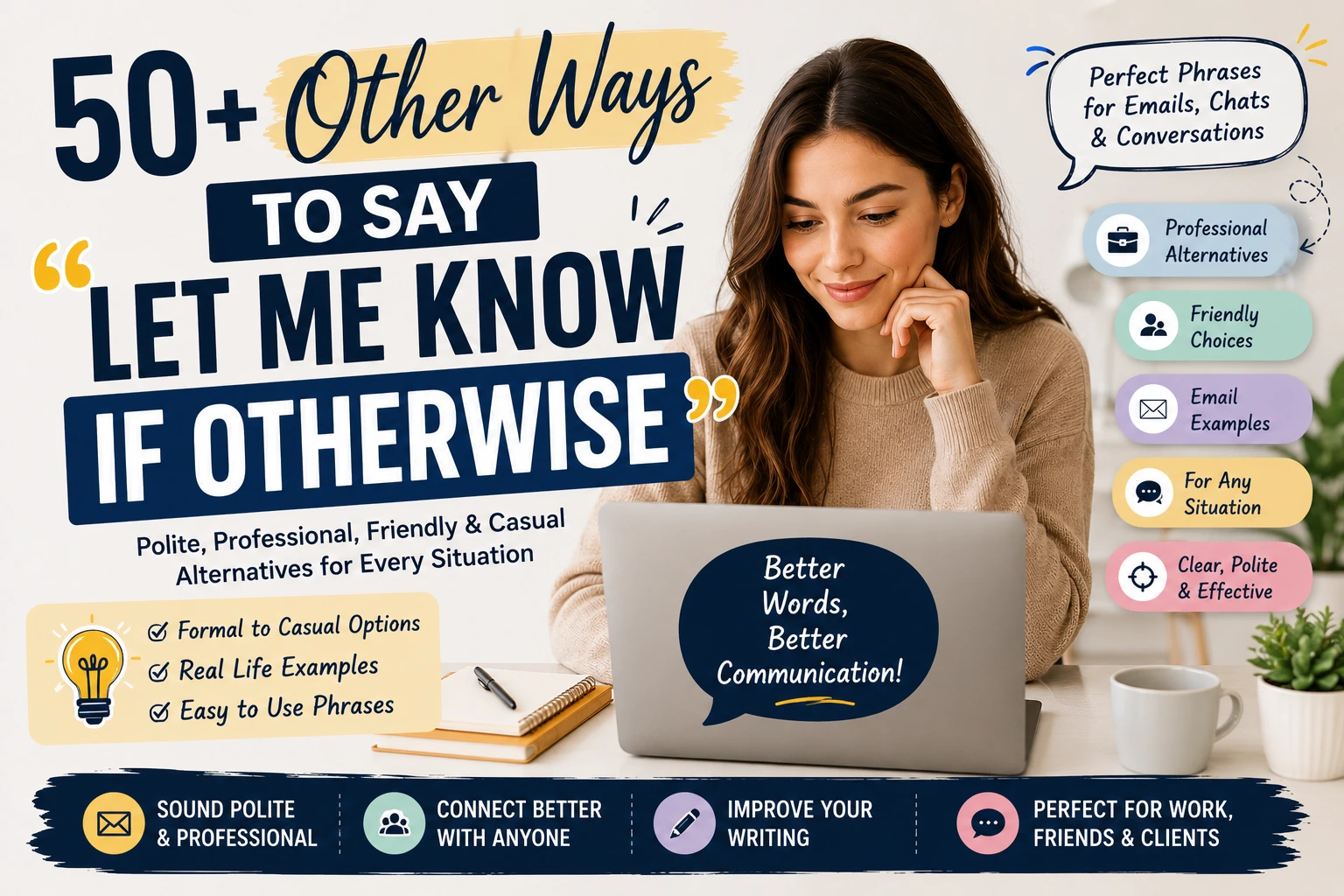
If you’ve ever written an email, sent a work message, or replied to a client, chances are you’ve ended with the phrase, “Let me know if otherwise.” While it’s polite and professional, using it repeatedly can make your writing sound repetitive or overly formal. That’s why many people look for other ways to say “let me know if otherwise” that feel more natural while still getting the same point across.
Whether you’re communicating with coworkers, customers, classmates, or friends, choosing the right wording can make your message sound clearer and more confident. Sometimes you want to sound professional, while other situations call for a friendlier or more conversational tone. In this guide, you’ll discover over 50 alternatives to “let me know if otherwise,” complete with real life examples that show exactly when and how to use each phrase.
What Does “Let Me Know If Otherwise” Mean?
The phrase “let me know if otherwise” is commonly used when you’ve made an assumption and want the other person to correct you if it’s not accurate.
For example, you might write, “I’ll plan to meet you at 2 PM. Let me know if otherwise.” This tells the recipient that you’ll proceed with your plan unless they have different information.
It’s most often used in professional emails, workplace chats, scheduling conversations, and customer service messages. While it’s perfectly acceptable, there are many smoother and more natural alternatives that fit different situations.
50+ Other Ways to Say “Let Me Know If Otherwise”
Formal Alternatives
Phrase: “Please let me know if this is incorrect.”
Example: You send meeting details to your manager and want them to correct any mistakes before the meeting.
Phrase: “Kindly advise if anything needs to be changed.”
Example: You submit a project draft and invite feedback.
Phrase: “Please inform me if this is not the case.”
Example: You’re confirming company policies with HR.
Phrase: “Feel free to correct me if I’m mistaken.”
Example: You’re discussing information that may have changed.
Phrase: “Please let me know if any adjustments are needed.”
Example: You send an event schedule to your team.
Phrase: “Kindly let me know if my understanding is incorrect.”
Example: You’re confirming instructions after a meeting.
Phrase: “Please advise if there are any changes.”
Example: You’re checking on travel arrangements.
Phrase: “Let me know if any revisions are required.”
Example: You send a report for approval.
Phrase: “Please notify me if this differs from your expectations.”
Example: You’re discussing project deliverables.
Phrase: “Let me know if further clarification is needed.”
Example: You explain a process in an email.
Professional Email Alternatives
Phrase: “Please let me know if anything changes.”
Example: You’re confirming tomorrow’s appointment.
Phrase: “Let me know if you have any updates.”
Example: You’re waiting for project progress.
Phrase: “Please let me know if this works for you.”
Example: You suggest a meeting time.
Phrase: “Let me know if you’d prefer another option.”
Example: You recommend two different solutions.
Phrase: “Please let me know if you’d like to discuss this further.”
Example: You finish a business proposal.
Phrase: “Feel free to reach out if anything changes.”
Example: You’re ending a client email.
Phrase: “Please let me know if there are any concerns.”
Example: You send a completed assignment.
Phrase: “Let me know if you need anything else.”
Example: You’re helping a customer.
Phrase: “Please confirm if this is correct.”
Example: You’re verifying important details.
Phrase: “Don’t hesitate to let me know if revisions are needed.”
Example: You deliver a design draft.
Friendly Alternatives
Phrase: “Just let me know if that’s not right.”
Example: You’re texting a friend about dinner plans.
Phrase: “Tell me if I’ve got it wrong.”
Example: You’re confirming vacation details.
Phrase: “Let me know if I’ve misunderstood.”
Example: You’re talking about someone’s plans.
Phrase: “Correct me if I’m wrong.”
Example: You’re discussing a shared memory.
Phrase: “Just let me know if anything’s different.”
Example: You’re confirming pickup time.
Phrase: “Give me a heads up if anything changes.”
Example: You’re planning a weekend trip.
Phrase: “Let me know if you think otherwise.”
Example: You’re sharing your opinion with a friend.
Phrase: “Keep me posted if plans change.”
Example: You’re organizing a group outing.
Phrase: “Just say the word if something comes up.”
Example: You’re waiting for confirmation.
Phrase: “Let me know if there’s a better plan.”
Example: You’re deciding where to meet.
Customer Service Alternatives
Phrase: “Please let us know if we can make any changes.”
Example: You’re sending an order confirmation.
Phrase: “Feel free to contact us if anything needs updating.”
Example: You email a customer after a purchase.
Phrase: “Let us know if you’d like any modifications.”
Example: You’re confirming a custom order.
Phrase: “Please reach out if your needs change.”
Example: You’re following up after a consultation.
Phrase: “We’re happy to adjust if needed.”
Example: You’re providing a service estimate.
Phrase: “Please let us know if this doesn’t meet your expectations.”
Example: You’re checking customer satisfaction.
Phrase: “Contact us if any details need correction.”
Example: You’re confirming shipping information.
Phrase: “We’ll gladly update this if necessary.”
Example: You’re sending an invoice.
Phrase: “Please advise if you’d prefer another option.”
Example: You’re offering multiple service packages.
Phrase: “We’re here if anything needs changing.”
Example: You’re closing a support email.
Casual Alternatives
Phrase: “Just let me know.”
Example: You’re making simple plans with a friend.
Phrase: “Keep me in the loop.”
Example: You’re waiting for updates.
Phrase: “Give me a shout if anything changes.”
Example: You’re confirming weekend plans.
Phrase: “Send me a message if needed.”
Example: You’re offering help.
Phrase: “Just keep me posted.”
Example: You’re waiting to hear back.
Phrase: “Let me know what’s up.”
Example: You’re checking in casually.
Phrase: “Drop me a text if anything changes.”
Example: You’re making travel plans.
Phrase: “Keep me updated.”
Example: You’re waiting for exam results.
Phrase: “Reach out if something’s different.”
Example: You’re discussing plans over text.
Phrase: “Tell me if anything comes up.”
Example: You’re arranging a meetup.
Real Life Situations
When Writing a Professional Email
Best Alternative: “Please let me know if any adjustments are needed.”
It sounds polished and invites helpful feedback.
When Confirming Meeting Plans
Best Alternative: “Please let me know if this works for you.”
It’s friendly, professional, and easy to understand.
When Texting a Friend
Best Alternative: “Give me a heads up if anything changes.”
This feels relaxed and conversational.
When Helping a Customer
Best Alternative: “Please let us know if we can make any changes.”
It sounds welcoming and customer focused.
When Working on a Team Project
Best Alternative: “Keep me posted if plans change.”
This encourages ongoing communication without sounding formal.
What to Avoid
Using the same phrase in every email.
Choosing language that’s too formal for casual conversations.
Making your message overly complicated.
Forgetting to invite feedback when confirmation is important.
Using vague wording that confuses the reader.
Ignoring your audience’s communication style.
Pro Tips
Choose a phrase that matches your audience. Professional emails usually need more formal wording than text messages.
Keep your sentence simple. Clear communication is almost always more effective than complex language.
If you’re asking for confirmation, make it easy for the other person to respond with a quick yes or correction.
Bonus: Quick One Liner Alternatives
“Please let me know if anything changes.”
“Keep me posted.”
“Correct me if I’m wrong.”
“Let me know if this works.”
“Feel free to update me.”
“Please advise if needed.”
“Tell me if I’ve misunderstood.”
“Reach out if anything changes.”
“Just let me know.”
“Please confirm if correct.”
Conclusion
Using different ways to say “let me know if otherwise” helps your emails and messages sound more natural, professional, and engaging. Whether you’re writing to a client, coworker, friend, or customer, choosing the right alternative makes your communication clearer and more confident. Small wording changes can leave a stronger impression and make every message feel more personal.
Discover more
funny nicknames for grumpy old man